



Exploring the intersection of spaceflight history, pop culture, and space art.
In this edition of Creating Space, I take you with me on my trip to the Pima Air and Space Museum in Tucson, Arizona. I share the origin story that kicked off my interest in airplanes and then take you into the museum to see some of the many aircraft on display. I round out the visit with a quick look inside the museum’s space gallery where I find an unexpected surprise.
Are you new to Creating Space? It’s the NERDSletter that explores the intersection of spaceflight history, pop culture, and space art. You can find this and all other posts at creating-space.art.
A Primo Trip to the Pima Museum
Last June (2025), after participating in the ‘Friends of Spacefest Reunion’, I spent an afternoon geeking out at the airplanes and spacecraft displays at the Pima Air and Space Museum in Tucson, Arizona. It was my first visit to the expansive museum, even though I had been to Tucson many times prior.
Flighty Interests
Many readers of Creating Space may know me mainly for my interest in (OK, obsession with) spaceflight and spacecraft. But, there is a slightly more down-to-Earth side of me that holds a fascination with atmospheric flight.
My interest in aviation has been with me since a very early age. In fact, my parents used to tell me about how – before I could talk – I would point at the airplanes flying over the Woodrow Wilson Bridge as they departed Washington National Airport along the Potomac River, and excitedly exclaim “Da! Da!”, which I believe loosely translates to “Look at that beautiful shiny thing up in the sky defying gravity over my head! I think I might want to design them one day!” It wasn’t too long before I learned to call them “panes”.
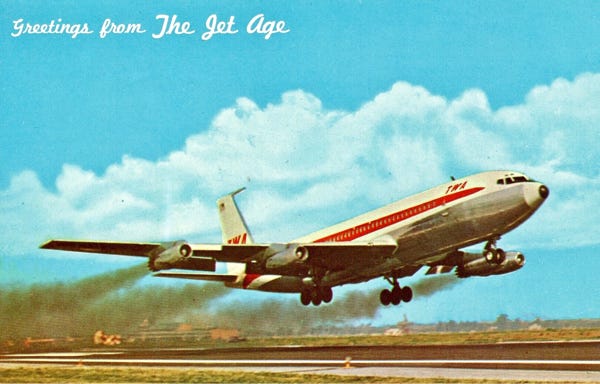
From that early age, onward, I pretty much followed what I believe is the standard path of many kids like me – reading books and magazines with pictures of airplanes and spacecraft, learning to make and fly paper and balsa wood airplanes, building plastic model kits of airplanes and spacecraft, going to air shows, visiting air and space museums, and wondering how airplanes fly.
Then, when I got a little older, I went to college to learn how airplanes fly and how to design them, worked as an aerospace engineer at an aerospace company (first helicopters, then commercial jets), and volunteered and worked at an air and space museum. Now, I continue to make visits to air and space museums, and attend space events, whenever I can.
An Arid Zone Museum
Given my lifelong interest in things that fly, it’s a wonder why I hadn’t made the time to see the Pima Air and Space Museum sooner. I think I was under the impression that it was a dry, Mars-like, desert boneyard for retired aircraft. In a very real sense, it does resemble one. But, what I didn’t realize was that it is much more than that.
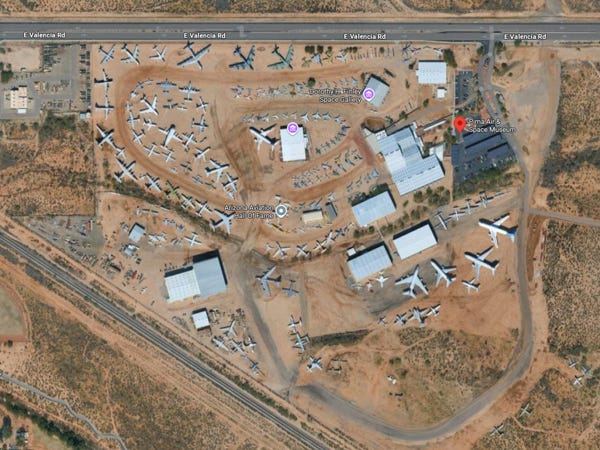
Indeed, there are a vast number of aircraft sitting out in the desert sun. I did a quick count from the aerial map and came up with close to two-hundred. Unfortunately, they are unprotected from the elements and are showing a fair amount of weathering.
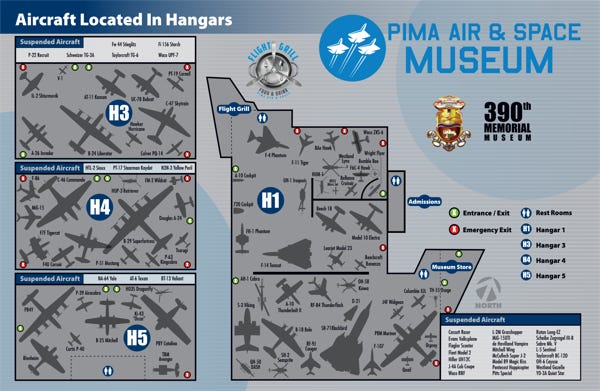
The museum-provided map groups the outdoor aircraft into fourteen categories, including U.S. Air Force and U.S. Navy fighters, bombers, transports, tankers, helicopters, commercial and civil aircraft, NASA research planes, among others.
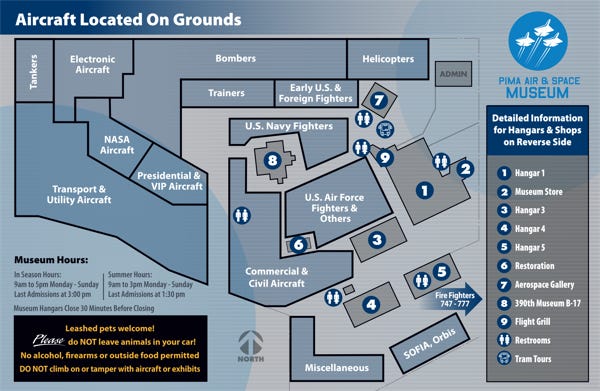
In addition to the outdoor aircraft, there are seven buildings on the grounds of the museum that house an impressive number of airplanes and space displays. The four largest hangars house, in total, approximately one-hundred aircraft. In contrast to the outdoor displays, the aircraft housed in the protective, climate-controlled hangars are largely clean, shiny, and brightly painted. Some have the appearance of coming fresh off the manufacturing floor.
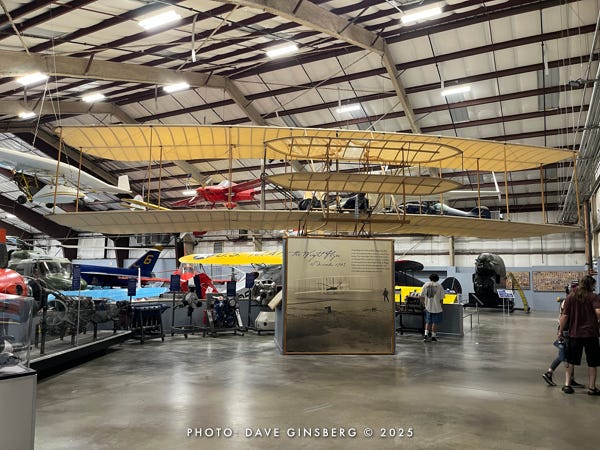
To give you a feel for the museum, here are a few of the photos I took on my visit.
An appropriate opening act for any good aviation museum: A replica of the 1903 Wright Flyer.
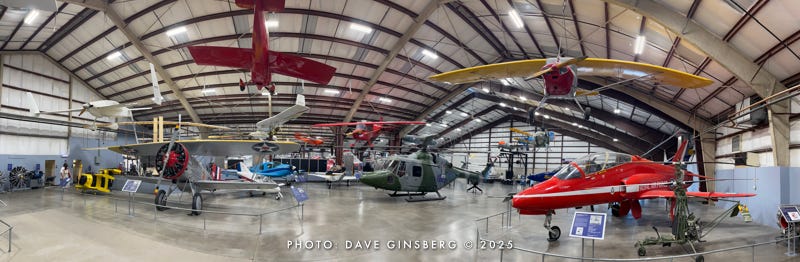
A wide panorama inside Hangar #1.
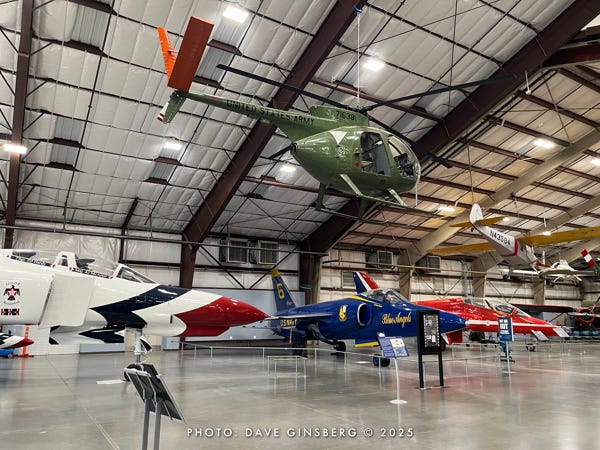
I mentioned, before that I’ve been enjoying air shows since I was a kid. The highlight of many of those shows was a performance by one of the armed forces aerial demonstration teams. Three of the teams I have seen perform are represented here – from left to right, the U.S. Air Force Thunderbirds (F-4E Phantom II), the U.S. Navy Blue Angels (F-11A Tiger), and the Royal Air Force Red Arrows (BAe Hawk T1A). It was planes like these in their demonstration team livery that I most often chose for my plastic model kit building enjoyment.
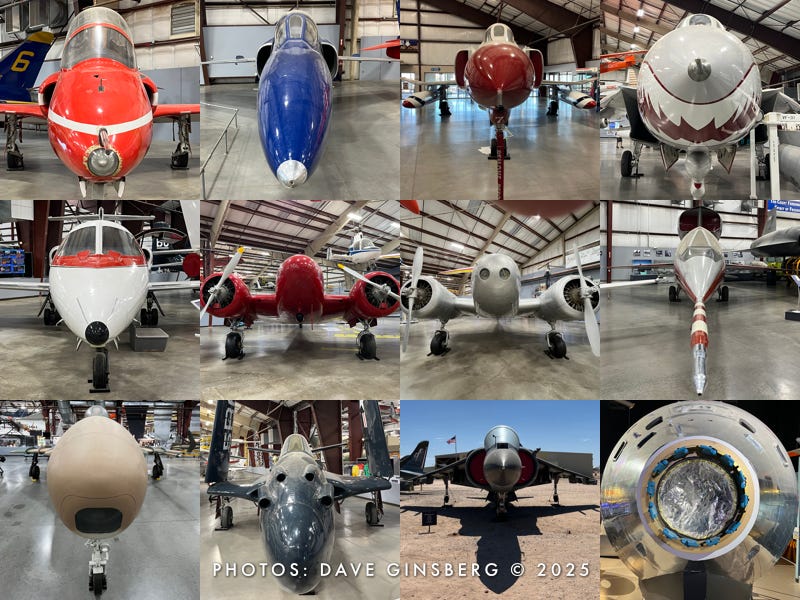
Give me a camera and put an airplane (or spacecraft) in front of me and I will give you a nose pic. Here are twelve. Can you identify them all? (Answers in the footnote1)
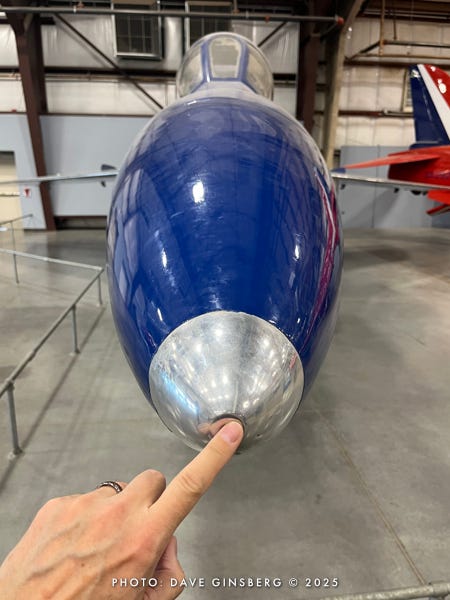
Obligatory BOOP!
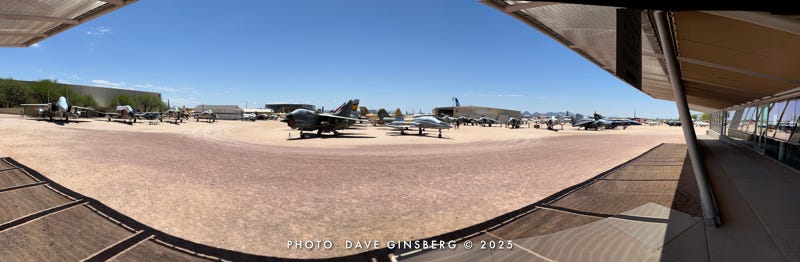
The June afternoon Arizona sun was too much for my Seattle-acclimated body to endure any appreciable time outside. This is a photo of the outdoor displays I snapped after taking a couple tentative steps beyond the air-conditioned comfort of the snack bar.
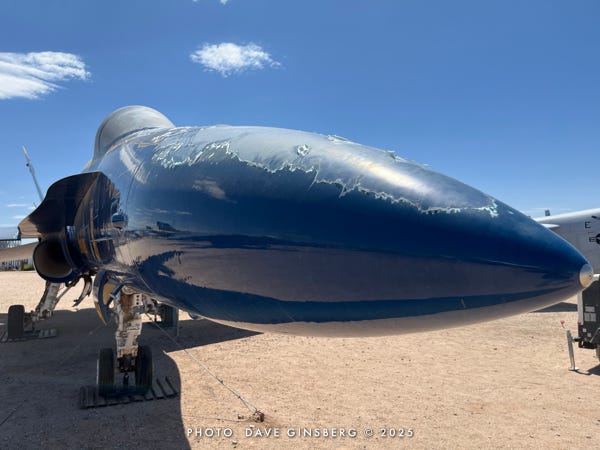
The space gallery was a reasonably short walk from the main display hangar. Along the way, I stopped briefly to take a couple photos of another Blue Angels jet, this one being an F/A-18C Hornet.
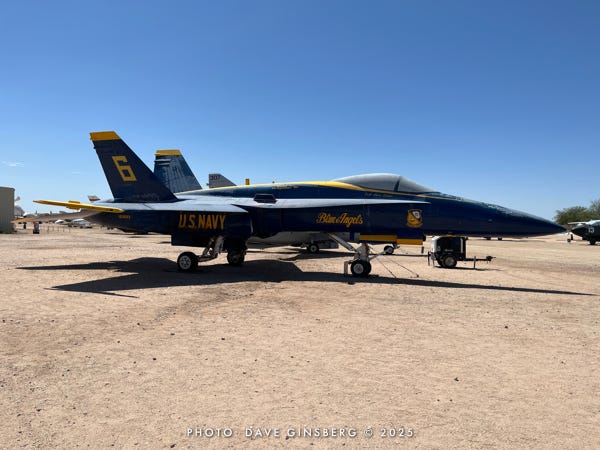
As I said earlier, the outdoor displays are showing the effects of the harsh environment. This close-up of the F-18 should make any true AvGeek cry a little.
Not Just Any Old Plane Museum
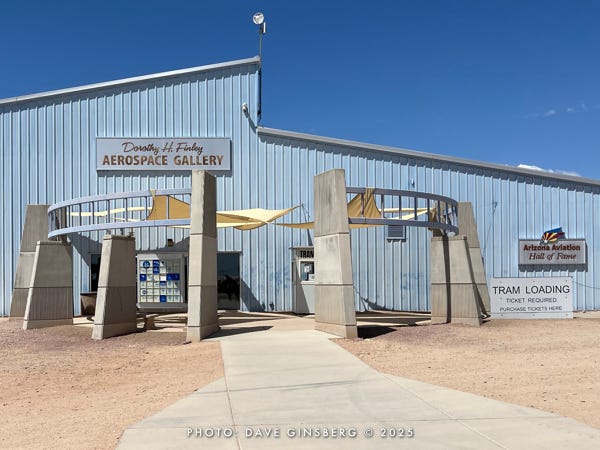
The space part of the Pima Air and Space Museum is relatively small in size, but it makes up for it with some impressive artifacts. The building is named for Dorothy Hunt Finley (1920-2013), a former educator and beer distributor who applied her wealth to many causes around Tucson.2
“We interrupt this program to bring you a special report”
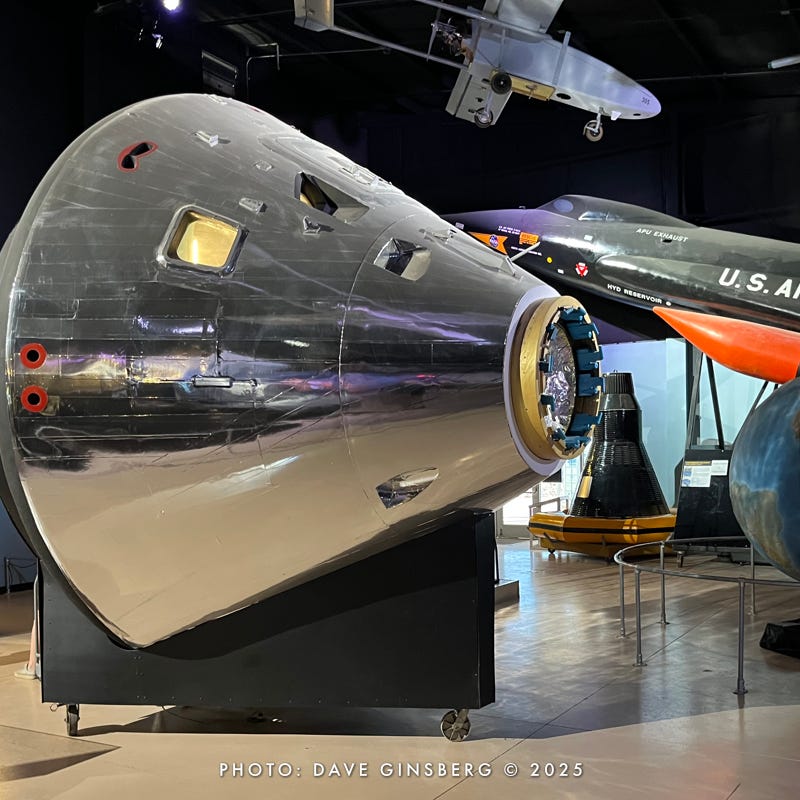
The first thing to catch my eye upon entering the space gallery was a mockup of the Apollo Command Module built by North American Rockwell. It stands in a docking-hatch-forward orientation upon a black wheeled base.
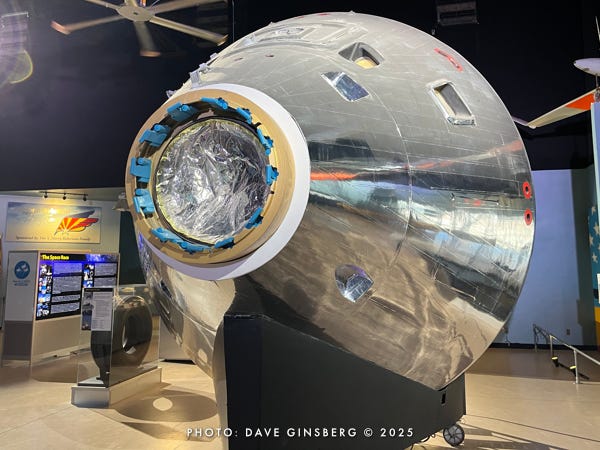
The aft end, where the heat shield would be on the real article, has a rectangular Plexiglas-covered cutout that allows viewing of the cabin interior. To get to that position, a five-step portable access stairway is provided.
As I approached the back of the mockup, I was transported to the 1960s by the bold white lettering written in a familiar typeface beside the viewing window – “NTC APOLLO COMMAND MODULE”. For me, it recalled the magazine photos and television news reports that featured this very mockup.
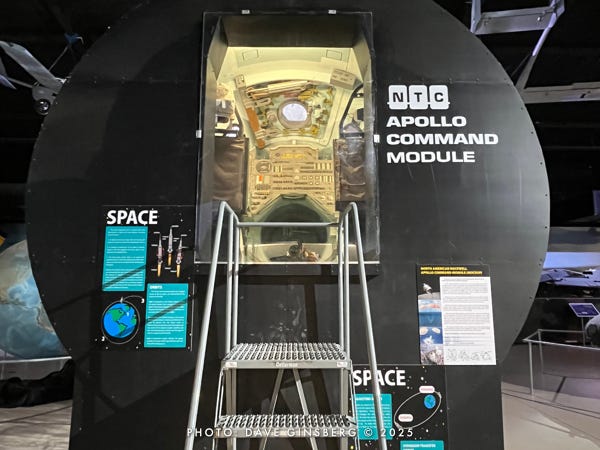
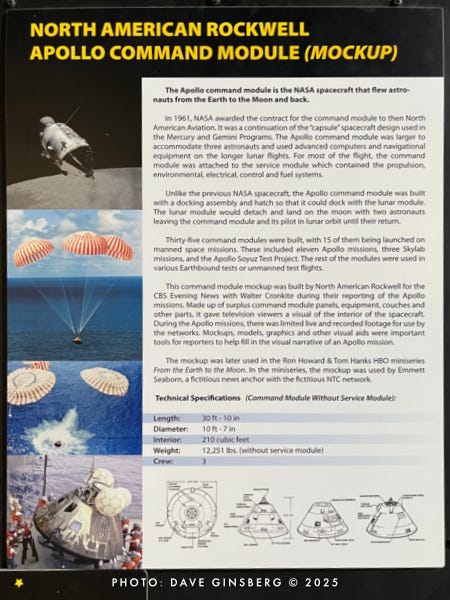
Indeed, the sign affixed to the mockup stated that it had been used for the CBS Evening News with Walter Cronkite during the Apollo missions. It went on to say that later on in its life, the mockup was used in the Ron Howard and Tom Hanks HBO miniseries, From the Earth to the Moon. In the miniseries, the character named Emmett Seaborn stood in for the news anchors of the time and worked for a fictitious television network called “NTC”.
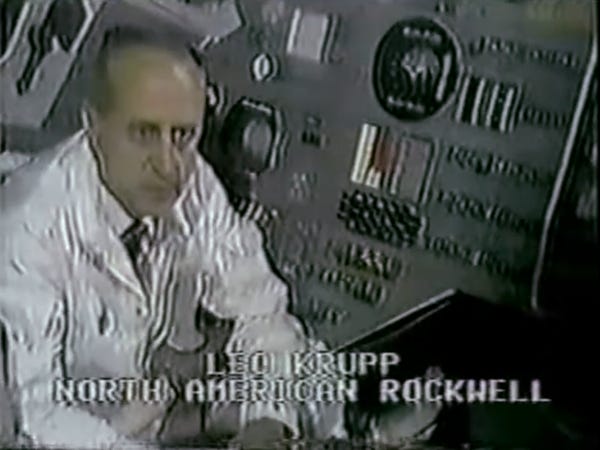
Here’s a screenshot from a CBS News report featuring Walter Cronkite speaking with research pilot, Leo Krupp, inside an Apollo Command Module mockup located at the North American Rockwell plant in Downey, California. This mockup would have been similar to the – if not the actual – mockup on display in the Pima museum.
Practice Makes Picture Perfect
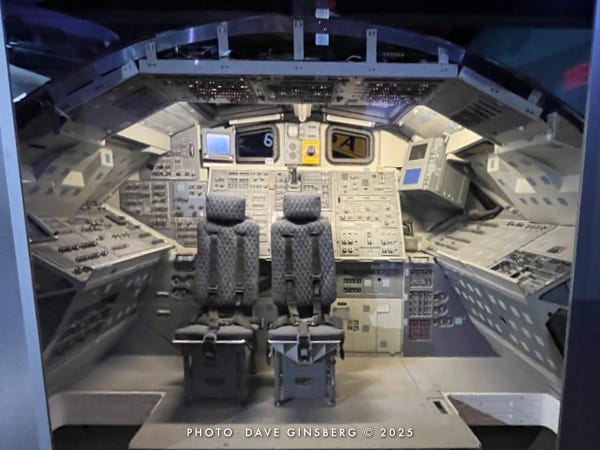
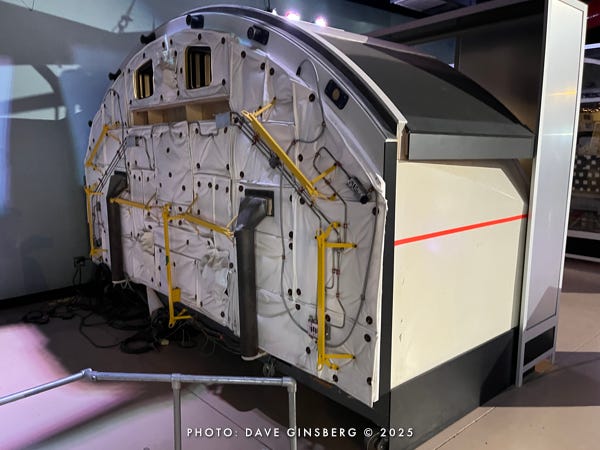
There is another equally impressive mockup in the space gallery, that being the Space Shuttle fixed-base Guidance and Navigation Simulator (GNS). Built in the late 1970s, the GNS is one of only three astronaut training simulators used in the Space Shuttle program at NASA’s Johnson Space Center in Houston, Texas. The other two were the motion-base Shuttle Mission Simulator (SMS) and the Fixed-Base Simulator (FBS).3
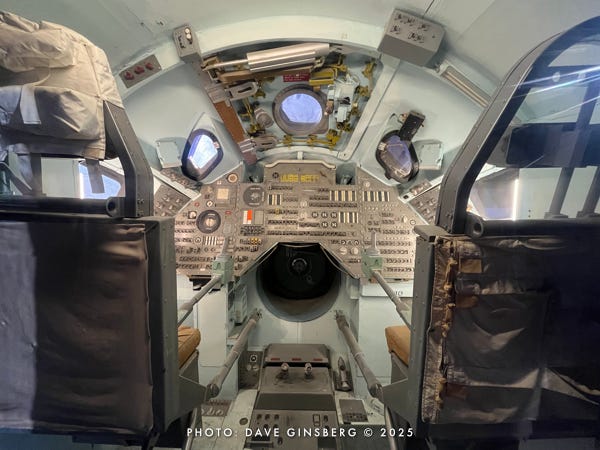
Here is a view of the forward flight deck, with the commander (left) and pilot (right) seats, flight controls, instrument panels, and windows.
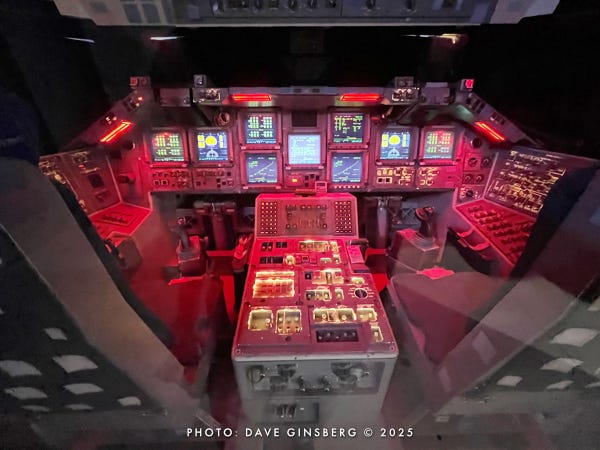
If you look closely at the photo of the forward flight deck, you may notice something interesting about the control columns located directly in front of each seat – one for the Commander and one for the pilot. They are called Rotational Hand Controllers (RHCs) and they are used for changing the attitude of the Orbiter in each of three axes (pitch, roll, and yaw). Each RHC sits atop a rectangular metal box. The interesting thing is that the box and the RHC are canted off axis about 20 degrees to the left. Two questions arose for me when I first saw this – why are they canted, and what axis system do they work in?
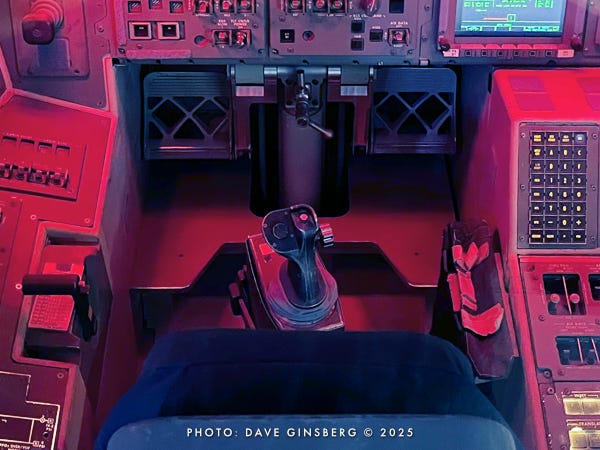
I recently had the opportunity to ask several former Space Shuttle pilots these questions.4 My guess to the first question – why they are canted – was that the angle of the controller made it easier for an astronaut to use in a pressurized space suit. Picture the angle of your forearm when reaching for the RHC located between your knees while wearing a bulky space suit. My guess was partially true. While it does make the controller easier to use, it helps even when the suits are not pressurized, which is most of the time. The suits are only pressurized during emergencies.
The answer to the second question – what axis system the RHCs work in – is related to the first, but I still found it surprising. To pitch the Orbiter nose down, for example, the pilot would rotate the controller forward in line with the canted axis of its support column, not along the Orbiter’s X-axis (nose-to-tail).
Situated several feet behind the forward flight deck is the aft flight deck simulator, containing aft crew seats and payload bay controls. In actual use, these two halves would be joined together during simulations and training.
In one of my conversations with former Shuttle pilots, Steve Lindsey shared that there was an additional set of flight controls located in the aft flight deck. These were used for rendezvous and docking with either the International Space Station (ISS) or the Russian MIR space station, and for some payload-related maneuvers. They were also used when performing the rendezvous pitch maneuver, or backflip as it was known, that was implemented in the aftermath of the Columbia breakup so that astronauts on the ISS could photograph and inspect the underside of the Orbiter for any damage to the thermal protection tiles.
Steve said that the aft RHC was configured with the pitch direction reversed relative to those in the forward flight deck. So, rotating the RHC forward, relative to the pilot while he was facing aft toward the tail, pitched the vehicle nose up and tail down. Steve said it felt very natural.
This diagram shows the sense of the control axes for each of the pilot positions used in the Shuttle – normal forward flight stations, aft flight deck while looking out the rear-facing payload bay windows, and while looking up through the overhead windows.
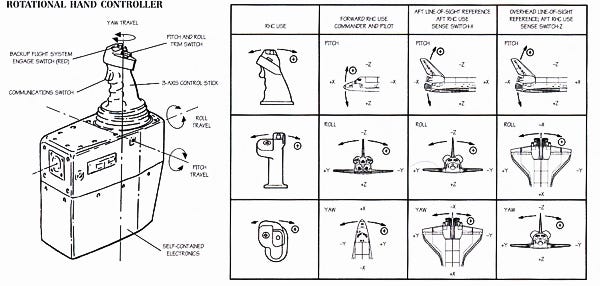
I am not a pilot, but I think these make intuitive sense. All except, that is, for the last one in the second row – “roll”, when looking up through the overhead windows, yaws the vehicle. I think that one would take me some getting used to.
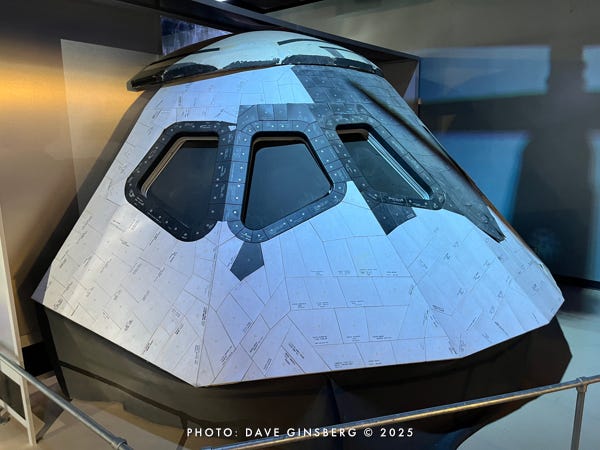
After the Space Shuttles were retired in 2011, the GNS was used in the 2022 science fiction movie, Moonfall. The filmmakers made modifications to the exterior of the simulator to give the appearance of an actual Space Shuttle Orbiter.56
So, both the Apollo mockup and the Space Shuttle simulator played parts in television and cinema.
Winging it in a Vacuum
The space gallery also houses a full-scale mockup of an X-15 rocket powered research aircraft. This particular model represents tail number 66671, which had the designation, X-15A-2. The actual article can be found at the National Museum of the United States Air Force near Dayton, Ohio.
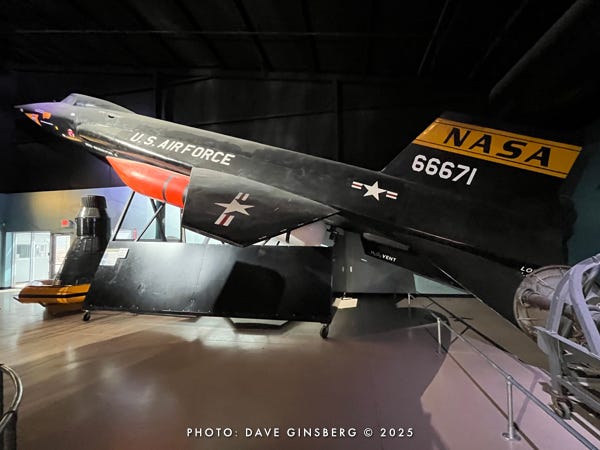
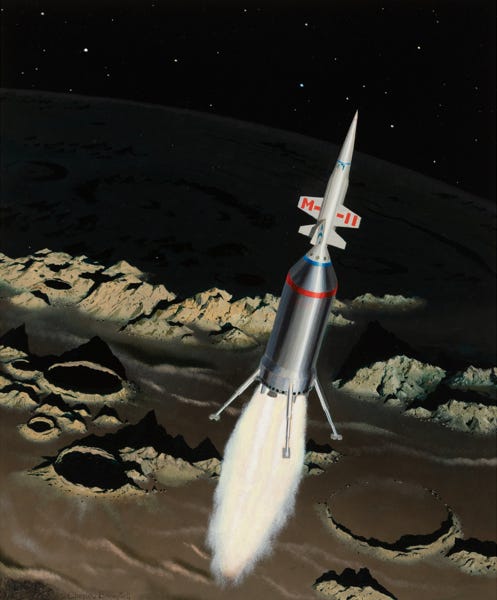
A full-size model of a Mercury capsule sits under the nose of the X-15. Mercury was, of course, NASA’s first manned orbital space vehicle which was a key stepping stone along the path to landing crews on the Moon. But, did you know that there were other alternate paths considered that featured a vehicle similar to the X-15?
Chesley Bonestell’s cover artwork for his 1961 book, Rocket to the Moon, illustrates one such concept. And, in case you think this is merely an artist’s fantasy, Bonestell acknowledges Wernher von Braun “for his valuable assistance in the design of the moon rocket”.
Massive Moon Model
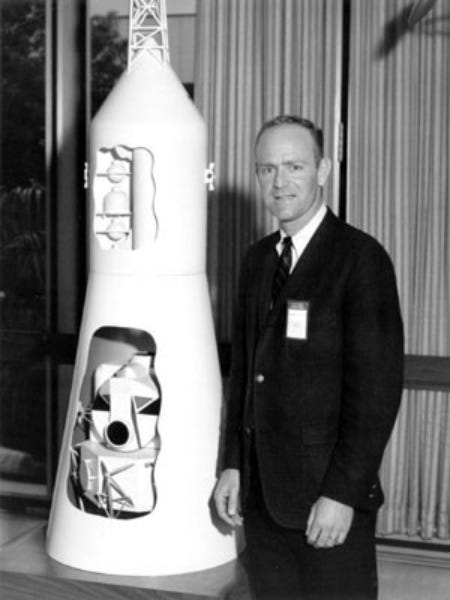
As cool as the mockups and simulator are, the item that almost made my model-loving heart stop was this beauty – and I almost missed it! Imagine my surprise when I stumbled upon this man-sized model of an early Apollo spacecraft design.
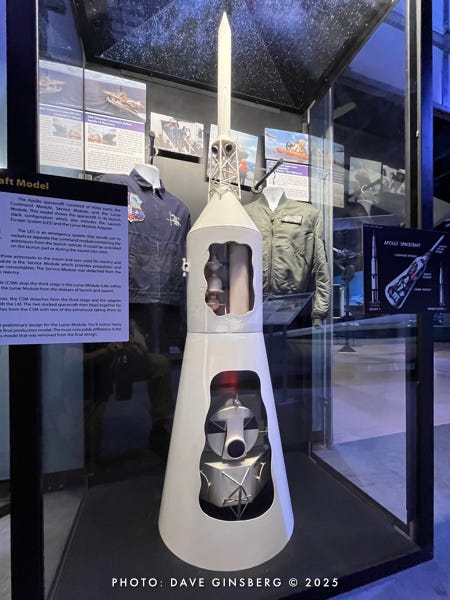
Located in an easily overlooked section of the space gallery, in a room far in the back, and tucked behind a partition, was a large cutaway model of the Apollo Command and Service Modules with the Lunar Excursion Module (LEM) inside its launch housing, and the Launch Escape Tower. I believe the model is 1:12 scale and represents the 1964-1965 iteration of the design.
I included an old photo of this model in an article I wrote about a LEM model similar to the one seen here that I had added to my collection. I joked about adding this one to my collection if I ever found it. Well ... I found it. Now will someone distract the guard and hold the door open for me?

Art News

This summer I will be returning to Tucson to participate as an artist in the ‘Spacefest Continues’ gathering. Eight other artists are currently scheduled to attend the event which includes astronaut talks, book author discussions, and usually a side trip or two to one of the local space-related places in and around the city.
The first Spacefest was held in 2007, organized by space artist Kim Poor, his extended family, and the good people at his space art and collectibles business, Novaspace Art. Since then, the event had been held yearly with just a few exceptions through 2021. The COVID-19 outbreak caused a suspension for several years.
In 2025, some enthusiastic friends of Novaspace and fans of Spacefest arranged a small-ish reunion at the Marriott Starr Pass Resort, where the majority of the previous events had been held. They called it, appropriately enough, the ‘Friends of Spacefest Reunion’.
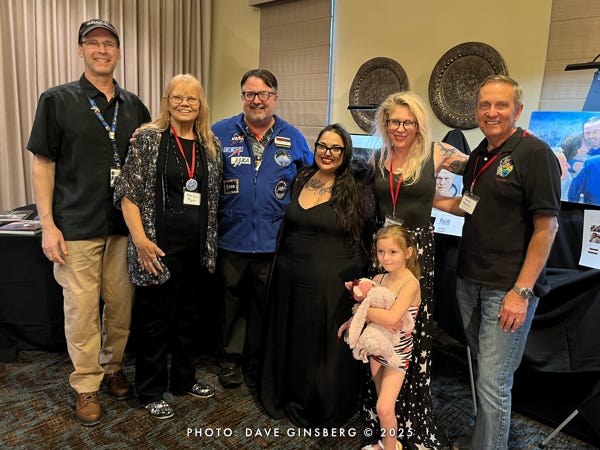
So successful and well-received was that event, this year they are planning another one – this time called ‘Spacefest Continues.’ This year’s event promises to be even bigger and better than last year’s. So far, there are five former astronauts scheduled to attend, over a dozen space authors, as well as the nine space artists.
I have displayed my artwork at five Spacefest events, including the 2025 ‘Friends of Spacefest Reunion’. ‘Spacefest Continues.’ will be my sixth.
The event will be held July 23 through 25, 2026 at the University of Arizona in Tucson. See the website and Facebook group for the latest updates.
Merch of the Month
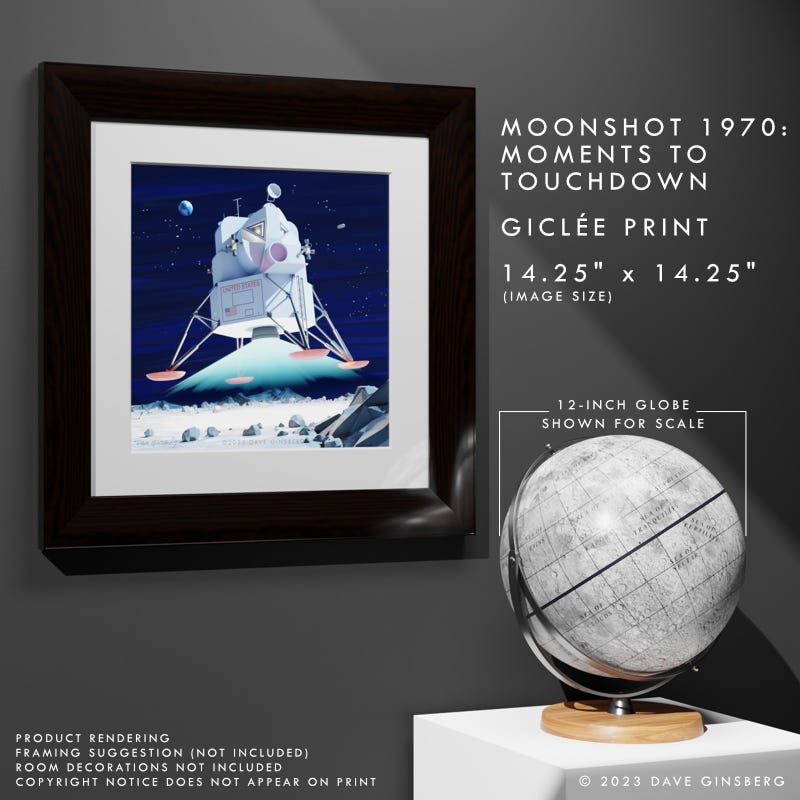
Moonshot 1970: Moments to Touchdown Giclée Print
Moonshot 1970: Moments to Touchdown is a reimagining in 3D of the cover illustration on the 1967 book “Moonshot 1970”. Written by Martha Lomask, illustrated by Gordon Mellor. The Apollo Lunar Excursion Module (LEM) is moments from touching down on its landing spot, illuminated in part by the soft blue Earthlight.
SOCIAL IMPACT
Your purchase from Pixel Planet Pictures helps support and promote space-related STEAM organizations and initiatives that enable and inspire students and youth to learn, develop, and pursue passions in science, technology, engineering, arts, and math.


I'm Dave Ginsberg, the artist behind Pixel Planet Pictures and writer of Creating Space.
I am an artist and a creative engineer with a love for teaching and passions for spaceflight, astronomy, and science. My space-inspired art portfolio can be found at pixel-planet-pictures.com.

Do you know fellow Space Geeks who might enjoy Creating Space? Invite them into this space, too!
Did you miss a post? Catch up here.

If you enjoyed this article please hit the ‘Like’ button and feel free to comment.

All images and text copyright © Dave Ginsberg, unless otherwise noted. All rights reserved.
Top row, L-R:
British Aerospace Hawk T1A (Royal Air Force Red Arrows)
Grumman F-11A Tiger (U.S. Navy Blue Angels)
McDonnell Douglas F-4E Phantom II (U.S. Air Force Thunderbirds)
Grumman F-14A Tomcat
Middle row, L-R:
Learjet Model 23
Beechcraft Model S18D
Lockheed Model 10A Electra
North American F-107A
Bottom row, L-R:
Republic RF-84F Thunderflash
McDonnell FH-1 Phantom I
McDonnell Douglas AV-8B Harrier II
North American Rockwell Apollo Command Module mockup
Dorothy Finley: ‘A life well-lived’ in Tucson community, Arizona Daily Star, Feb 22, 2013
Informational placard affixed to the Space Shuttle fixed-base Guidance and Navigation Simulator (GNS), Pima Air and Space Museum, Tucson, Arizona
I prefaced my question to Steve Lindsey by stating that I had a geeky technical question. He interjected with, “Wait a minute ... There is no such thing as a geeky technical question, especially among all these space enthusiasts!” So, I corrected my premise by saying “I had a normalized technical question.”
Informational placard affixed to the Space Shuttle fixed-base Guidance and Navigation Simulator (GNS), Pima Air and Space Museum, Tucson, Arizona
‘Moonfall’ filmmakers saved NASA shuttle simulator now in museum, collectSPACE, January 31, 2022
Awesome 'tour' you provide!